What to Look for in a High School Sports Program
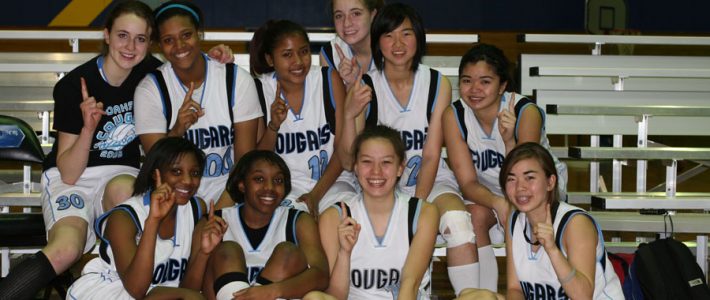
What to look for in a high school sports program? Three things: The opportunity to play, the quality of teaching and learning, and the values that undergird the program.
What to look for in a high school sports program? Three things: The opportunity to play, the quality of teaching and learning, and the values that undergird the program.

Most families live in communities with multiple good schools and multiple pathways to gain admission. While finding and getting into a good school can feel overwhelming, it’s usually possible.

The world of private schools is diverse and sometimes surprising. Here are 10 facts you might not know that may be helpful as you consider your school options. Unless otherwise noted, all data is provided by the federal government for
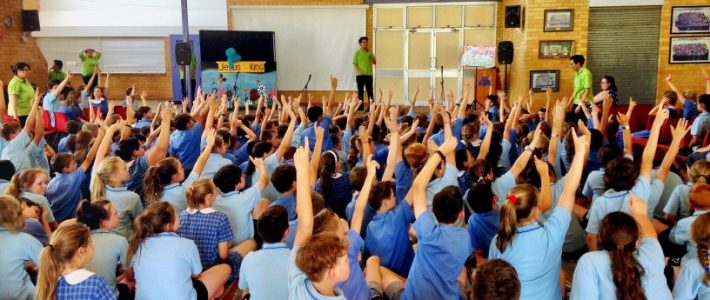
Parents are naturally attracted to small class sizes because it seems more likely that the teacher will be able to manage the classroom well and will be able to get to know and serve each child well. But is this the right way to think about class size? How much does class size really matter?
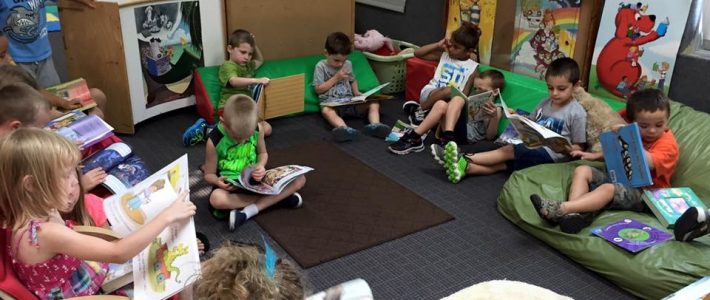
It’s all the rage these days for schools to claim they’re student centered. But what does this phrase actually mean? In my experience, schools may be talking about three different but related ideas when they use the phrase “student centered.”

Listening to what young adults say about the Raise Ready Kids Big Three School Quality Factors: Program, Teaching, and Culture.

When might it make sense to send a smart kid to a lower-performing school and when might it not? This is ultimately a personal decision and there is no one right answer. However, let me share five of my own considerations, which may be helpful to you if you’re grappling with this question.
![[Diverse students]](https://raisereadykids.com/wp-content/uploads/DiverseKids_Twenty20_via_@debduca-710x300.jpg "How a Diverse School Can Make Your Child Smarter")
As you evaluate your school options, you should know there are cognitive as well as social benefits to your child being in a diverse school because diversity forces people to do more cognitive work than they otherwise would.
![[Former Steelers owner Dan Rooney]](https://raisereadykids.com/wp-content/uploads/dan_rooney-710x300.jpg "When Choosing a School, Try the Rooney Rule")
The Rooney Rule requires NFL teams to interview nonwhite candidates when they hire a new head coach. Similarly, when choosing a school for your child, you should consider at least one school that pushes the limit of your comfort zone.

If you’re trying to evaluate schools — whether you’re looking for a school for your child or wondering about the quality of your child’s current school — you need to know about Benjamin Bloom and his famous taxonomy of learning: remembering, understanding, applying, analyzing, evaluating, and creating.
![[photo: child reaching toward hot stove]](https://raisereadykids.com/wp-content/uploads/rrk_kid_hot_stove-1000-710x300.jpeg "Natural Discipline Is the Best Discipline")
The classic example of natural discipline at work is when a child learns to not touch a hot stove by … touching a hot stove. Lesson learned!

You can learn a lot about a school by trying to observe its core values in action. Look on the playground and in the hallway. How are students spending time? How are parents and visitors treated?

Who gets hired? Increasingly, the interesting candidate. Who has the more interesting life? Well, that’s easy: the interesting person. So let’s forget about smart or creative or good for a few minutes. How to you raise an interesting child? Here’s a five-part formula.
![[kids holding plants]](https://raisereadykids.com/wp-content/uploads/KidsPlants-635x300.jpg "With Parenting, the Best Defense Is a Good Offense")
Over the years, I’ve noticed differences among parents that I believe explain some of the differences in how kids are doing in their teen years. The differences I observe have more to do with how parents play offense than how they play defense. Let me explain.
![[teacher with students]](https://raisereadykids.com/wp-content/uploads/12212474014_523cd63525_b-710x300.jpg "What’s Most Important When Evaluating School Quality?")
When evaluating a school, I believe in stepping back and considering what I call the Raise Ready Kids Big Three School Quality Factors: Program, Teaching, and Culture. More than anything else, these three factors determine school quality.

Take a moment to ask yourself: What amazing powers does your child have already? What discoveries are they making? What matters to them?

The next time you’re about to offer praise to your child, consider a question or observation as great way to not only share your approval but also promote your child’s awareness of their own accomplishment and their interest in building on it.
“He’s stubborn, just like you!” your friend says. And you wonder: Is that because of the genes you share with your child? Or did he learn it from you? It’s the old “nature versus nurture” debate.
Parents can’t ensure their children’s success, but they can raise ready kids by helping them acquire knowledge, skills, character, and a sense of purpose.

Just as your four-year-old will not remember that wonderful visit you had at Grandma’s house, she also will not remember the time you were so frustrated, stressed, or sleep deprived that you screamed at her.

If you are doing well or are committed to getting better at these seven things, then I’d say the answer is yes, you are doing a good job as a parent.

What we really want is for our children to make good decisions and act responsibly on their own. Right now, though, they’re still in the process of developing the skills they need to be able to make good choices. They need our help.

The idea is simple: Before correcting your child, take time to connect with him or her.

Whether one is 4, 12, or 40, “play” is not the opposite of “work.” It’s actually the process by which we discover what delights us and what we really care about.
With a Chocolate Factory, plenty of free time for messing around, and a little encouragement, who knows what planet your children will find themselves on — it’s bound to be good!

When you and your child can laugh about all the setbacks and injustices that these games visit upon us, well, I think you’ve all learned something worthwhile. I’m still a work in progress.

When early childhood educator Erika Christakis began teaching preschool in 2001, she was troubled to find that some children at her school were not into pretend play. They could run, throw a ball, do all sorts of art projects, discuss
I’ve been in a few homes with play areas for children that look something like this: I’ve been in other homes with play areas for children that look more like this: They’re both gorgeous. But they’re very, very different! Take

Pretend play is terrific for children, helping them learn self-regulation, language, and social skills. To inspire pretend play, teach children about roles in the adult world and help them get started with a few simple props. Carla, mother of four-year-old

Pretend play is not only delightful, it’s also an extraordinarily valuable learning experience for children.
Executive function is a foundation of learning and life success. You can’t learn if you can’t pay attention, remember, or resist temptations.
![{Photo: child holding apple]](https://raisereadykids.com/wp-content/uploads/holding-an-apple-at-the-orchard_t20_pxze7W-710x300.jpg "What If I Don’t Want My Child to Be Just Like Me?")
You can help your child learn to manage their emotions by arranging experiences that stretch their abilities just the right amount.

Our kids are seeing us fight, but they’re not seeing us make up. They’re seeing the conflict, but they’re not watching how we resolve the conflict.
Using first principles parenting, we can trade off conflicting values and make the right decision for our children and ourselves.

You know empathy is important for you and your child, but is it really something you can get better at? Yes, it is! Here’s one tried-and-true method.

TV background noise harms children. Turn off the TV when your child is playing nearby.

Perspective-taking means recognizing that other people have thoughts and feelings different from our own — and being able to imagine what they might be. Your preschooler is just beginning to learn perspective-taking. You can help by encouraging them to think
Premature babies are under enormous stress. When doctors observe closely, they see that preemies are actually providing clues about how adults could help them manage their stress. You can do the same thing with your preschooler. Observing your child closely,

Your child began to develop a simple form of memory in the womb, before 30 weeks of gestation. Fetuses as young as 23 weeks can recognize a loud sound made close to the mother’s abdomen. How do we know?

Our behaviors and decisions arise out of a kind of conversation between two parts of our brain: the lower limbic and upper limbic systems. The quality of that conversation has everything to do with the kind of life we will